HTC Bets on Open AI Strategy to Gain Ground in Smartglasses Market
Daniel Okoye
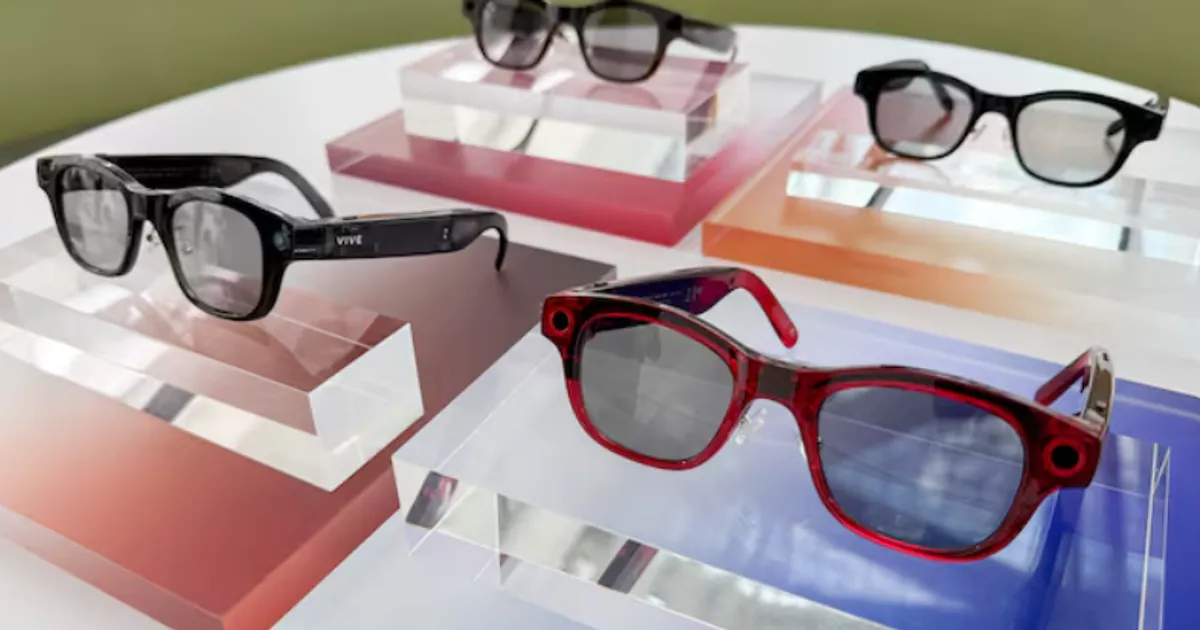
TAIPEI — Dec 22 (GeokHub) Taiwanese technology company HTC is positioning itself for growth in the rapidly expanding smartglasses market by embracing an open artificial intelligence strategy, allowing users to choose between multiple AI platforms rather than locking them into a single ecosystem.
The company’s newly launched AI-powered smartglasses, branded under the VIVE line, are designed to support several leading AI models, a move HTC believes will help it compete in a sector increasingly dominated by tightly controlled platforms.
Open Platform Approach
HTC executives say the pace of AI development makes it risky for hardware makers to rely on just one provider.
“AI is evolving extremely fast, with model developers competing at enormous scale,” said Charles Huang, HTC’s senior vice president for global sales and marketing. “Our approach is to leverage the strengths of multiple platforms rather than build a closed system.”
The VIVE smartglasses currently support several AI models, including offerings from major U.S. technology firms, allowing users to benefit as each platform improves.
This contrasts with rival products that are built around proprietary AI systems, particularly those developed by U.S. and Chinese tech giants for their own ecosystems.
Asia-First Expansion Plan
HTC launched the VIVE smartglasses earlier this month in Hong Kong, pricing them at about $512. The company plans to roll out the product in Japan and Southeast Asia in the first quarter of 2026, with Europe and the United States expected to follow later in the year.
According to HTC, the decision to prioritise Asia reflects both market opportunity and product design.
“Many smartglasses have been designed primarily for Western users,” Huang said, noting that facial fit and comfort remain important considerations for Asian consumers.
China Market Poses Challenges
While Hong Kong served as the first launch point, HTC said entering mainland China would require more preparation due to regulatory complexity.
Foreign AI services face restrictions in China, while data protection rules require localised servers, making market entry more demanding. HTC said it is proceeding cautiously and has not set a timeline for a mainland China launch.
Rapid Market Growth, Rising Privacy Concerns
Global shipments of smartglasses more than doubled in the first half of this year, according to industry estimates, with a single U.S. competitor accounting for the majority of sales.
However, analysts warn that as smartglasses gain features such as cameras, voice assistants and real-time AI processing, privacy concerns could intensify — especially around how user data is collected and used.
HTC says privacy is a key part of its positioning. Huang said user data from its smartglasses is not used to train AI models and that data protection is a core differentiator from rivals.
Return to Consumer Hardware
The launch marks a renewed push by HTC into consumer hardware, following its decision earlier this year to sell part of its extended reality business to a major U.S. technology firm.
By combining lightweight eyewear with flexible AI integration, HTC hopes to carve out a niche in a market that is quickly moving beyond smartphones toward wearable, AI-driven devices.