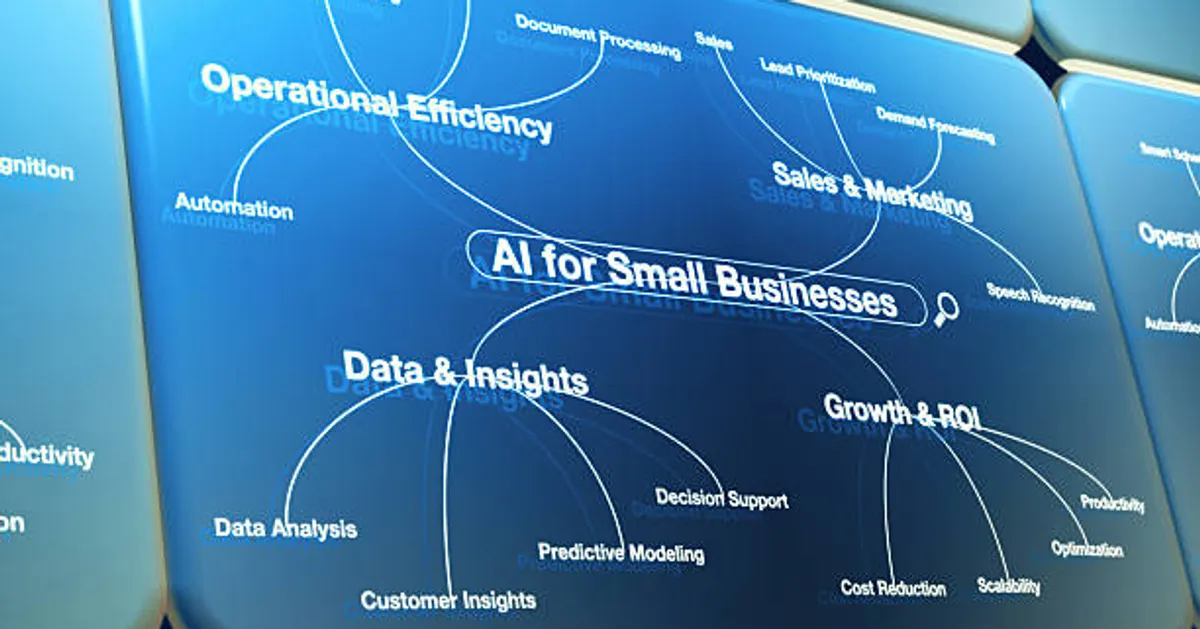
Artificial intelligence is no longer a luxury for large corporations. In 2026, small businesses are leveraging AI tools to automate marketing, capture leads, and increase conversions—often with fewer resources than ever before.
But with hundreds of tools flooding the market, the real challenge isn’t access—it’s identifying which ones actually generate revenue rather than just saving time.
Recent industry trends show that the most effective AI tools are those integrated directly into sales, marketing, and customer experience workflows, helping businesses convert prospects into paying customers faster and more efficiently.
What Makes an AI Tool “Convert”?
Not all AI tools deliver results. The ones that truly convert typically offer:
- Automation of revenue-generating tasks (emails, follow-ups, lead nurturing)
- Personalization at scale (targeted messaging and offers)
- Integration with business systems (CRM, websites, ads platforms)
- Real-time decision-making based on customer data
Tools that only generate content without driving action often fail to impact the bottom line.
Top AI Tools That Actually Drive Conversions
1. ChatGPT — All-in-One Conversion Engine
One of the most versatile AI tools for small businesses, ChatGPT helps convert leads across multiple touchpoints.
How it converts:
- Writes high-converting landing pages and sales copy
- Automates email sequences and follow-ups
- Powers chatbots that respond instantly to customer inquiries
- Generates product descriptions that improve sales
Businesses using AI assistants like ChatGPT report saving hours weekly while improving marketing output quality and consistency.
2. Jasper AI — High-Converting Marketing Content
Designed specifically for marketers, Jasper focuses on conversion-driven content.
How it converts:
- Creates ad copy optimized for clicks and sales
- Generates email campaigns with strong call-to-actions
- Maintains consistent brand voice across campaigns
Its structured templates for sales funnels and ads make it especially effective for businesses focused on lead generation.
3. Systeme.io — Funnel + Email Automation
Systeme.io combines multiple tools into one platform, making it ideal for small teams.
How it converts:
- Builds automated sales funnels from lead to checkout
- Sends behavior-based email campaigns
- Optimizes subject lines and messaging using AI
This all-in-one approach eliminates the need for multiple subscriptions while improving conversion tracking.
4. GoHighLevel — AI CRM for Sales Growth
GoHighLevel is built for businesses that want to automate their entire sales process.
How it converts:
- Captures leads and automatically follows up
- Books appointments through AI-driven workflows
- Tracks pipeline and customer journeys
AI-powered CRM systems are increasingly critical because they automate repetitive sales tasks and reduce missed opportunities.
5. Canva Magic Studio — Visual Content That Sells
Visual content plays a major role in conversions, especially on social media.
How it converts:
- Creates engaging ads and social media graphics
- Transforms designs into multiple formats instantly
- Maintains brand consistency automatically
Strong visuals can significantly increase engagement and click-through rates, directly impacting sales.
6. Tidio — 24/7 Lead Capture
AI chatbots are one of the highest-converting tools for small businesses.
How it converts:
- Responds instantly to website visitors
- Qualifies leads automatically
- Books appointments without human input
Businesses using AI chatbots often see faster response times and higher conversion rates because no lead is left unattended.
Real Insight: What Businesses Are Actually Using
Beyond marketing hype, real-world users emphasize that automation tools connected to actual workflows deliver the best results.
“Lead submits form → AI qualifies lead → CRM updated → follow-up email sent automatically.”
This type of end-to-end automation—not just content generation—is what truly drives conversions.
Key Trends Shaping AI for Small Businesses
- AI is shifting from assistive tools to autonomous systems
- Platforms are becoming all-in-one ecosystems (CRM + marketing + automation)
- Social platforms are integrating AI directly into business tools
Major tech companies are also investing heavily in AI for small businesses, aiming to automate marketing, customer service, and content creation at scale.
How to Choose the Right AI Tool
To avoid wasting money, small businesses should focus on:
- Tools that directly impact revenue (not just productivity)
- Platforms that integrate with existing workflows
- Solutions that automate follow-ups and lead nurturing
Starting with one or two tools and scaling gradually often produces better results than adopting too many at once.
Final Thoughts
AI is transforming how small businesses operate—but the real winners are those using it strategically. Tools that automate sales processes, personalize customer interactions, and streamline marketing workflows are proving to deliver measurable returns.
Rather than chasing every new platform, businesses should focus on AI tools that connect directly to revenue generation. In today’s competitive digital landscape, that difference can determine whether a business simply survives—or scales.