China’s LandSpace Seeks Capital Market Support as It Takes Aim at SpaceX
Daniel Okoye
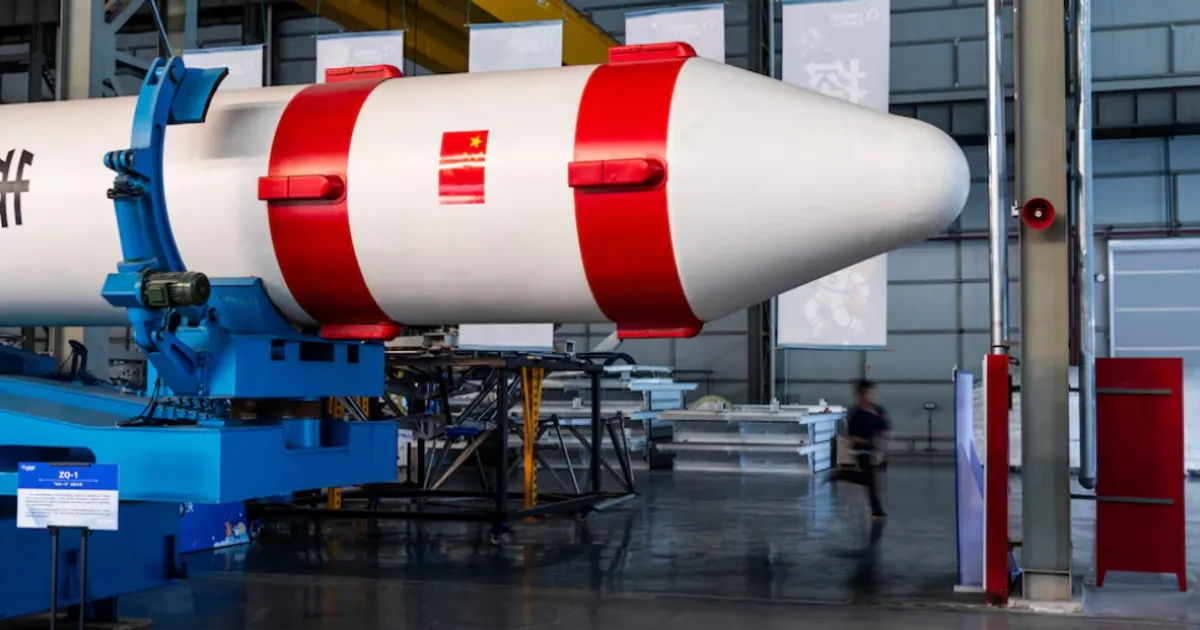
BEIJING | Dec 29 (GeokHub) China’s commercial space company LandSpace is positioning itself to challenge Elon Musk’s SpaceX, as Beijing moves to channel more capital market support toward domestic private rocket makers ahead of potential initial public offerings.
China opened its space sector to private investment in 2014, paving the way for startups such as LandSpace. Authorities are now looking to help leading players tap public markets more easily, recognising the heavy financial demands of commercial spaceflight.

LandSpace founder and chief executive Dai Wei said SpaceX’s deep financial backing has been a critical advantage, allowing the U.S. company to absorb massive losses during the testing of its fully reusable Starship launch system.
“For us, we are not yet able to do that,” Dai told state broadcaster CCTV. “I believe our country has recognised this, allowing capital markets to support companies in areas like commercial spaceflight.”
‘IN ANOTHER LEAGUE’
A month before LandSpace attempted to launch its Zhuque-3 reusable rocket, Musk publicly commented on the Chinese company’s design.
Reacting on X to footage of the rocket’s assembly, Musk said Zhuque-3 incorporated elements of SpaceX’s Starship, including stainless steel construction and engines powered by methalox — a mixture of methane and liquid oxygen — applied to a structure similar to SpaceX’s Falcon 9.
“They have added aspects of Starship, such as use of stainless steel and methalox, to a Falcon 9 architecture, which would enable it to beat Falcon 9,” Musk said in October, in his first public remarks about LandSpace.
“But Starship is in another league.”
REUSABILITY REMAINS THE KEY HURDLE
Reducing launch costs is central to the strategies of both SpaceX and LandSpace. While materials like stainless steel and methalox engines play a role, industry experts say the biggest cost savings come from recovering and reusing rocket boosters.
LandSpace is pressing ahead despite a setback earlier this month, when Zhuque-3’s booster failed to ignite its landing burn around 3 km above ground, causing it to crash rather than complete a controlled descent.
The company is preparing another test launch and may take encouragement from SpaceX’s own path: the U.S. firm did not achieve its first successful Falcon 9 booster landing until 2015, after multiple failed attempts.