Inside China’s Secret Push to Break Western Dominance in Advanced AI Chips
Daniel Okoye
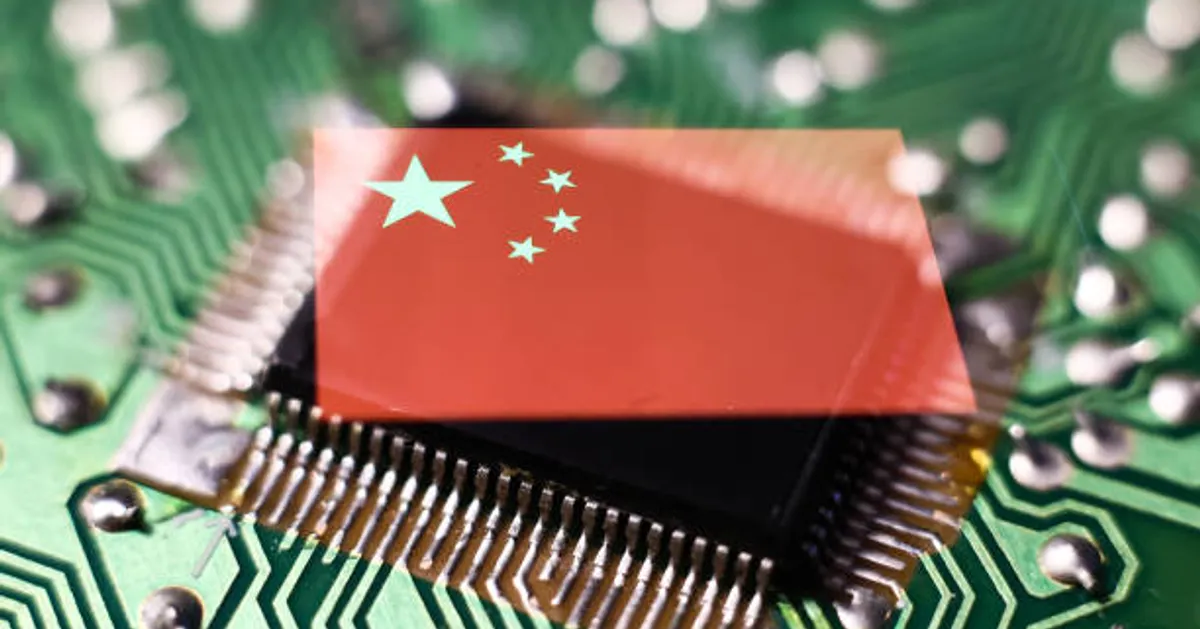
SINGAPORE — Dec 17, 2025 China has quietly taken a major step toward semiconductor self-sufficiency after building a prototype machine capable of producing the world’s most advanced chips, according to people familiar with the project — a development that could significantly narrow the technology gap with the West.
The machine, completed in early 2025 inside a high-security laboratory in Shenzhen, is designed to replicate extreme ultraviolet (EUV) lithography, the most sophisticated chipmaking technology in existence. EUV systems are essential for producing cutting-edge processors used in artificial intelligence, smartphones and advanced military applications.
While the prototype has not yet produced working chips, it is operational and generating extreme ultraviolet light, marking a breakthrough many analysts believed was still a decade away.
A High-Stakes Technological Race
EUV lithography sits at the center of global technological competition. The machines etch circuits thousands of times thinner than a human hair onto silicon wafers, enabling faster and more powerful chips. Until now, this capability has been monopolized by Western suppliers.
China’s progress suggests it may be years — not decades — away from mastering the technology, despite sweeping export restrictions aimed at cutting off access to advanced chipmaking equipment.
People familiar with the effort say the government has set an internal goal of producing usable chips by 2028, though those directly involved believe 2030 is a more realistic timeline.
A ‘Manhattan Project’ for Chips
The effort is described by insiders as China’s equivalent of the Manhattan Project — a coordinated, state-led initiative involving thousands of engineers, research institutes and technology firms working under strict secrecy.
Former engineers trained at leading Western semiconductor firms were recruited to the project, some operating under aliases inside the secure facility. Their expertise proved critical in reverse-engineering components and accelerating development.
The program has been a top national priority for nearly six years, reflecting China’s determination to eliminate reliance on foreign chip technology amid escalating geopolitical tensions.
Technical Barriers Remain
Despite the progress, major challenges remain. Replicating the ultra-precise optical systems required for EUV lithography has proven particularly difficult. These components demand extreme accuracy and reliability, and even minor imperfections can render chips unusable.
The prototype currently lags behind the most advanced commercial systems in terms of efficiency, stability and output. Engineers are still working to refine optical performance and contamination control before the machine can be used for mass chip production.
Why It Matters
Advanced chips are the backbone of artificial intelligence, next-generation computing and modern defense systems. China’s ability to eventually produce them domestically would reshape global supply chains and weaken the effectiveness of export controls.
Even partial success could give China greater leverage in the global technology race and reduce its vulnerability to future restrictions.
For now, the prototype represents progress — not parity — but its existence signals that the gap between China and Western chipmakers may be closing faster than expected.