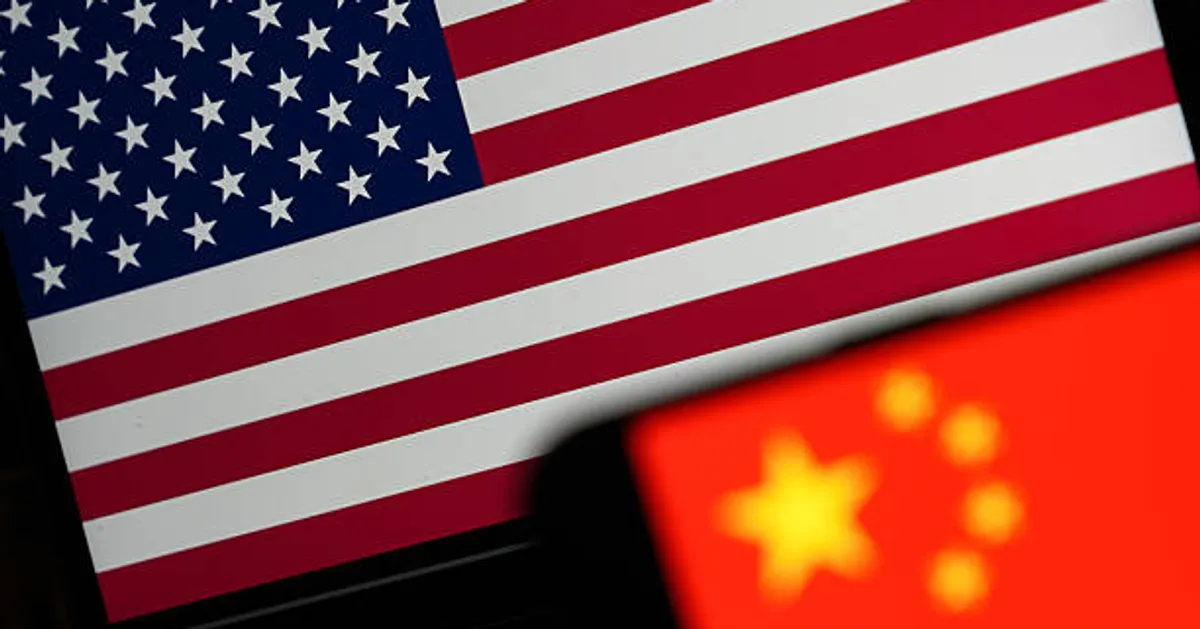
A CORUÑA, Spain, Feb. 5 (GeokHub) — The United States and China declined on Thursday to sign a joint declaration outlining principles for the use of artificial intelligence in warfare, as only about a third of countries attending a global military AI summit agreed to the non-binding pledge.
The declaration was endorsed by 35 of the 85 nations participating in the Responsible AI in the Military Domain (REAIM) summit in A Coruña, Spain. While the agreement aims to guide responsible deployment of AI in military operations, major powers opted out amid growing geopolitical tensions and uncertainty over future security alliances.
Several delegates said strained relations between Washington and its European allies, combined with questions about the long-term direction of transatlantic ties, made some governments reluctant to commit to joint positions on sensitive defence technologies.
The pledge reflects increasing concern among policymakers that rapid advances in artificial intelligence could outpace existing rules governing its military use, potentially increasing the risk of accidents, miscalculations or unintended escalation during conflicts.
Dutch Defence Minister Ruben Brekelmans described the situation as a strategic dilemma for governments seeking to balance innovation with restraint.
“Russia and China are moving very fast,” Brekelmans said. “That creates urgency to develop AI capabilities, but it also increases the urgency to ensure responsible use. Those two things must go together.”
The declaration commits signatories to 20 guiding principles, including maintaining human responsibility over AI-enabled weapons, ensuring clear command and control structures, conducting rigorous risk assessments and testing, and providing proper training and education for personnel operating AI systems. It also encourages information-sharing on national oversight frameworks where compatible with security considerations.
Although the document carries no legal force, some participants remained cautious about endorsing more detailed policy commitments, according to Yasmin Afina, a researcher at the United Nations Institute for Disarmament Research who advised on the process.
Previous REAIM summits in The Hague in 2023 and Seoul in 2024 saw around 60 countries support a lighter, non-binding “blueprint for action,” which included the United States but excluded China.
Major signatories to Thursday’s declaration included Canada, Britain, France, Germany, the Netherlands, South Korea and Ukraine.