OSLO | Jan 21 (GeokHub) As U.S. President Donald Trump presses to acquire Greenland, citing national security concerns, Denmark and Greenland’s autonomous government insist existing defense agreements already address Washington’s needs. The Arctic, a region of growing strategic importance, is home to eight nations — Russia, the United States, Canada, Denmark, Norway, Sweden, Finland, and Iceland — each maintaining a range of military assets to safeguard territorial claims and Arctic interests.
Russia: Northern Dominance
Russia controls roughly half of the Arctic and has revitalized Soviet-era bases since 2005. Its Northern Fleet, headquartered in Severomorsk on the Kola Peninsula, operates six nuclear-armed submarines capable of second-strike retaliation. Russia’s nuclear testing site on Novaya Zemlya remains active, and the region is critical for access to the North Atlantic via the Barents Sea.
United States and Canada: NORAD and Arctic Modernization
The U.S. and Canada jointly defend against Arctic threats through NORAD, modernizing systems with over-the-horizon radars expected by 2028. Trump has highlighted Greenland as crucial for the proposed Golden Dome missile defense system. U.S. forces include eight bases in Alaska with ~22,000 personnel, plus the Pituffik Space Base in northern Greenland. Canada maintains five Arctic bases, including Alert, the world’s northernmost inhabited military station, and is building a Baffin Island facility for ship refueling.
Denmark: Greenland Defense Command
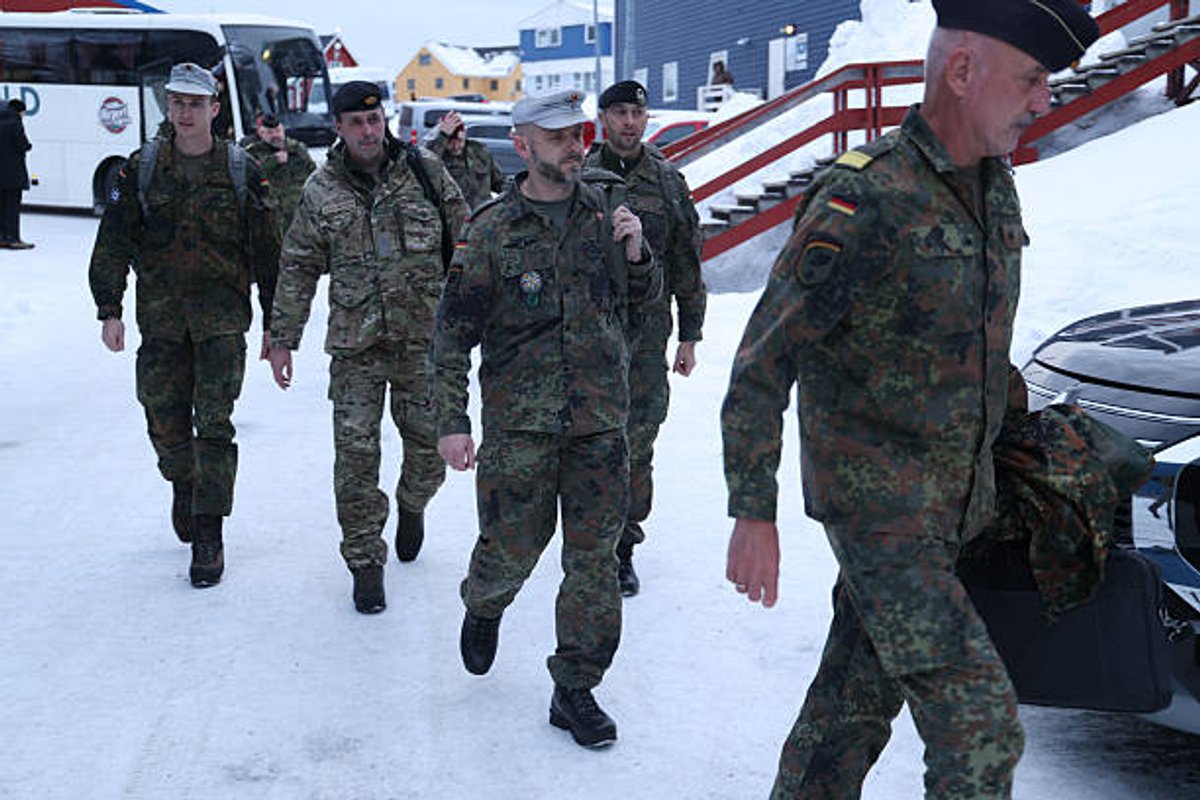
Denmark’s Joint Arctic Command (JAC), based in Nuuk, has roughly 150 personnel, plus stations at Kangerlussuaq and four other Greenland sites. The JAC also oversees the Sirius Dog Sled Patrol, a long-range reconnaissance unit in extreme northeastern conditions.
Sweden and Finland: Strategic Air and Army Bases
Sweden and Finland have limited Arctic bases but integrate their forces into NATO. Sweden operates an air base at Lulea and an army base in Boden, while Finland maintains an air base in Rovaniemi and a Jaeger Brigade in northern Lapland.
Norway: Arctic NATO Watch
Norway monitors roughly 2 million sq km of the North Atlantic, including the Arctic. It maintains four air bases (including for F-35 jets), two navy bases, multiple army stations, and NATO reinforcement centers. Svalbard has no military presence.
Iceland: Strategic Air Patrols
Iceland, a NATO member with no standing military, relies on its coastguard and hosts rotational U.S. Navy P-8A Poseidon maritime-patrol aircraft at Keflavik, with NATO fighter jet rotations three times a year to secure airspace.
Strategic Implications
The Arctic’s military infrastructure underlines its strategic importance amid rising geopolitical competition. While Trump frames Greenland as essential for U.S. defense, Arctic nations continue to bolster forces, enhance readiness, and maintain international alliances to secure the region against both conventional and emerging threats.