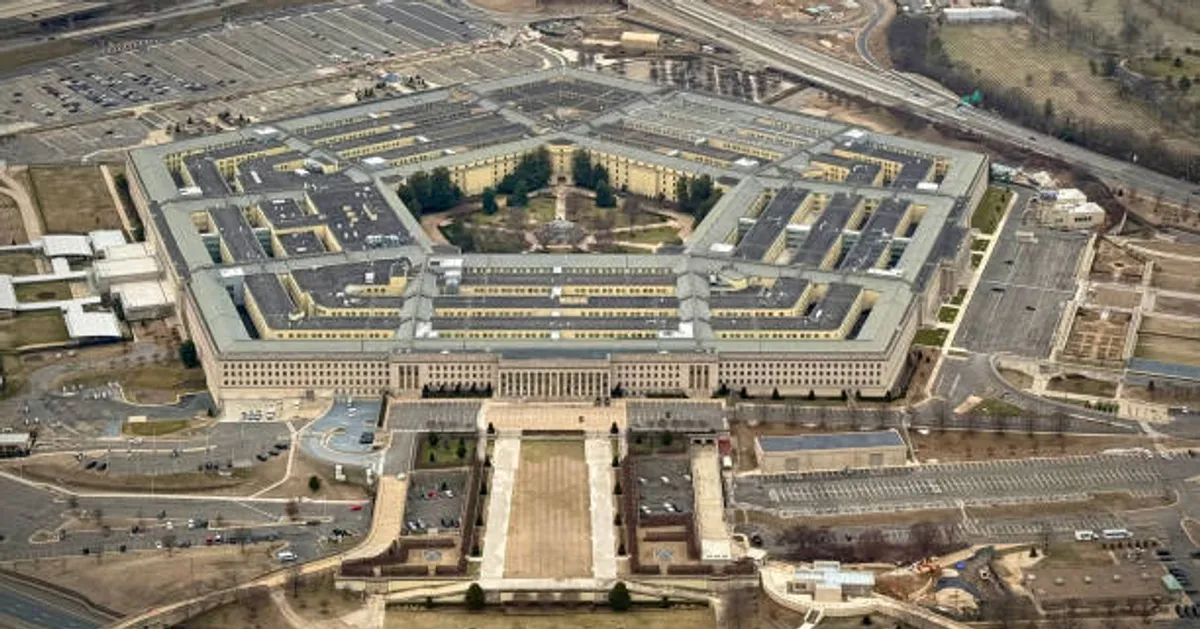
NEW YORK — March 9 (GeokHub) - Artificial intelligence company Anthropic has filed a lawsuit against the United States Department of Defense, escalating a major dispute over how advanced AI systems should be used in military operations.
The legal action, filed Monday in federal court in California, seeks to overturn a decision by the Pentagon to designate the company as a national security supply-chain risk. The designation could restrict how government agencies and contractors use Anthropic’s AI technology, particularly its flagship system, Claude AI.
Anthropic argues that the government’s action is unlawful and violates constitutional protections, including free speech and due process. The company is asking the court to nullify the designation and prevent federal agencies from enforcing it.
The dispute intensified last week after the Defense Department formally imposed restrictions on the company, citing concerns tied to national security operations. The decision came after Anthropic declined to remove certain safeguards built into its AI systems that limit their use in autonomous weapons and domestic surveillance.
According to the company, those restrictions are deliberate safety measures designed to prevent advanced AI tools from being deployed in ways that could cause unintended harm. Anthropic maintains that current AI technology is not yet reliable enough to control fully autonomous weapon systems without significant human oversight.
The Pentagon’s move followed months of negotiations between government officials and the company over how the technology should be used in military settings. Officials insisted that national defense laws should determine how artificial intelligence is deployed, arguing that limitations imposed by private companies could restrict operational flexibility during critical missions.
The disagreement has become one of the most prominent clashes between the U.S. government and a major AI developer over control of emerging technology.
Anthropic’s chief executive, Dario Amodei, has previously stated that the company does not oppose the concept of AI-assisted defense systems but believes the current generation of models is not yet advanced enough to safely support fully autonomous weapons.
In a separate legal filing, the company also challenged a broader designation that could potentially extend restrictions across civilian government agencies. The scope of that review remains uncertain as federal authorities assess how widely the measures could apply.
The legal battle has drawn attention across the technology industry. A group of researchers and engineers affiliated with leading AI firms such as OpenAI and Google submitted a supporting legal brief, warning that the government’s actions could discourage open debate within the AI research community about the risks and ethical boundaries of the technology.
Meanwhile, analysts say the conflict could have ripple effects across the rapidly expanding enterprise AI market. Some companies using Anthropic’s AI tools may delay deployments until the courts clarify how government restrictions could affect partnerships involving federal contracts.
The dispute also unfolds amid a broader push by the Defense Department to integrate artificial intelligence into national security operations. In the past year, the Pentagon has signed agreements worth up to $200 million with major AI developers to explore advanced applications across defense networks.
At the center of the conflict is a fundamental question: who ultimately determines how powerful AI technologies are used — the governments that fund and deploy them, or the companies that build them.
The outcome of the case could shape the future relationship between Silicon Valley’s AI labs and national security institutions, potentially influencing how AI companies negotiate safety policies with governments around the world.