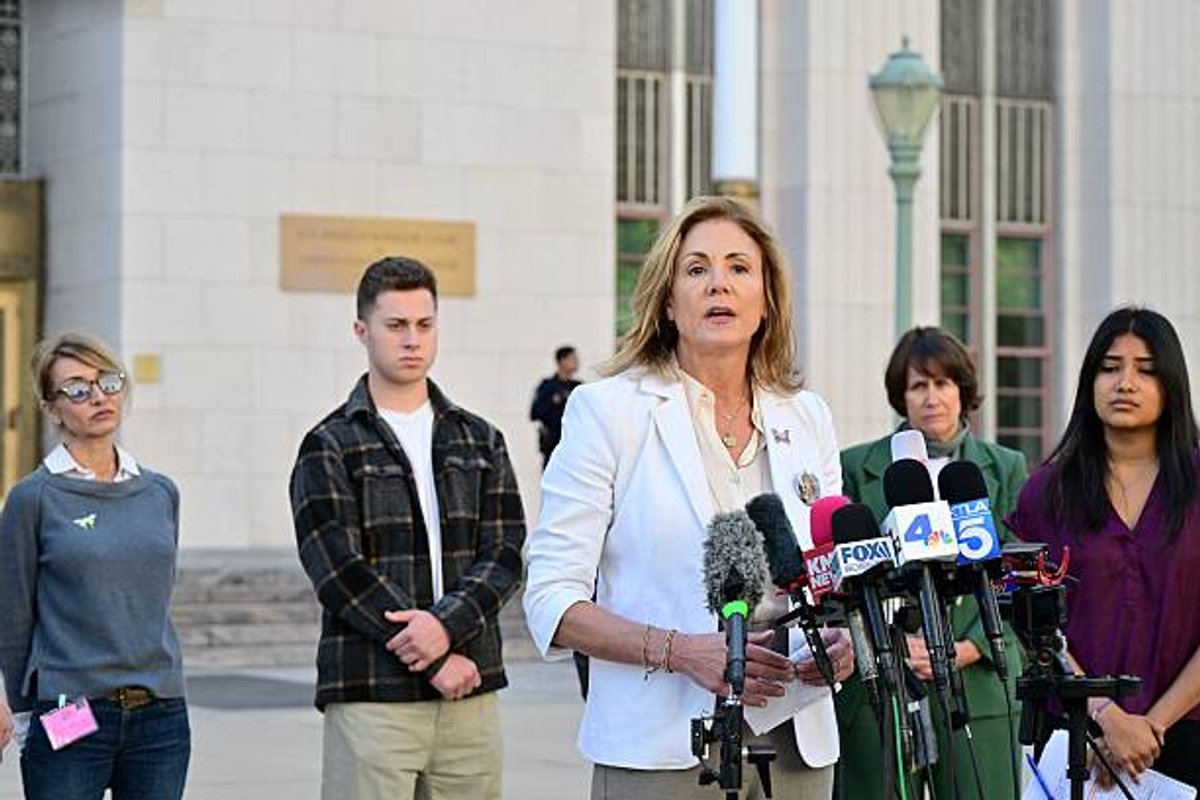
LOS ANGELES, Feb. 25 (GeokHub) — A former psychotherapist testified Tuesday that a California teenager’s use of social media was a contributing factor to her mental health struggles, as a closely watched civil trial tests whether major technology platforms can be held legally responsible for the design of their apps.
The case, being heard in Los Angeles County Superior Court, involves a young woman identified in court as Kaley G.M., who is suing Meta over Instagram and YouTube, owned by Alphabet. She alleges that early exposure to the platforms contributed to anxiety, depression and body image issues during her childhood and adolescence.
Victoria Burke, a licensed therapist who treated Kaley in 2019 when she was 13, told jurors that while she could not conclude social media directly caused the teen’s conditions, she believed it played a role.
Under cross-examination, Burke described social media as a “contributing factor” to Kaley’s struggles, which included fear of social rejection and concerns about perceived physical flaws.
Diagnoses and Testimony
Burke initially diagnosed Kaley with generalized anxiety disorder before later revising the assessment to social phobia and body dysmorphic disorder. She treated the teenager for several months while working as a therapy trainee for a school district.
The therapist testified that Kaley reported instances of online bullying by peers. She also acknowledged that the teen’s experience online was not entirely negative, recalling that Kaley enjoyed creating video content, though she sometimes felt frustrated when others claimed credit for her work.
Kaley is expected to testify later this week, followed by her mother.
A Broader Legal Reckoning for Big Tech
The lawsuit is part of a growing international backlash against social media companies over concerns about their impact on children and teenagers. Some governments, including Australia, have introduced restrictions on youth access to certain platforms, while others are debating similar measures.
To prevail in court, Kaley’s legal team must demonstrate that the design or operation of the platforms was a substantial factor in causing or worsening her mental health challenges.
Her attorneys argue that features such as autoplay videos, infinite scrolling feeds, “like” buttons and beauty filters were designed to maximize engagement, potentially reinforcing validation-seeking behavior and body image concerns among young users.
Meta Chief Executive Mark Zuckerberg previously testified that while the company discussed potential products aimed at younger audiences, such initiatives were never launched.
Defense Arguments and Platform Data
Attorneys for YouTube contend that Kaley did not fully utilize platform tools intended to manage bullying or limit screen time. Court filings indicate that her average daily use of YouTube Shorts was approximately one minute and 14 seconds, while her average streaming time over the past five years was about 29 minutes per day.
Defense lawyers have also pointed to aspects of Kaley’s personal history, including family instability, arguing that multiple factors may have influenced her mental health.
Burke testified that she did not formally assess Kaley’s daily screen time during treatment. She also noted that “social media addiction” is not formally recognized as a diagnosis in the latest edition of the Diagnostic and Statistical Manual of Mental Disorders (DSM), the primary reference guide for U.S. mental health professionals.
Legal and Industry Implications
The trial could have far-reaching consequences for the technology sector. A ruling that holds social media companies liable for platform design choices could reshape how digital products are built, regulated and marketed to younger audiences.
The case also underscores a broader societal debate over whether tech platforms should bear responsibility for potential psychological harms linked to user engagement models.
As testimony continues, the proceedings are being closely monitored by legal experts, policymakers and technology firms worldwide.