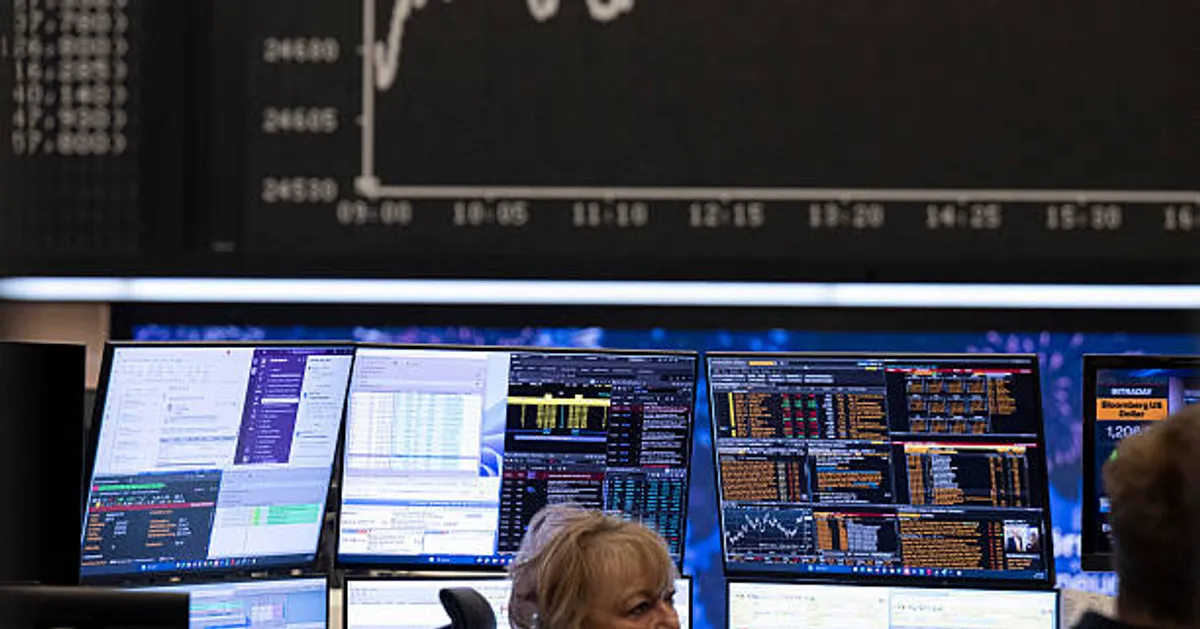
LONDON/NEW YORK, Jan 5 (GeokHub) — Global investors are expected to increasingly hunt for undervalued opportunities across financial markets in 2026 as concerns grow that a powerful rally driven by artificial intelligence has pushed major technology stocks close to bubble territory, analysts say.
U.S. equities endured sharp swings in 2025, tumbling toward bear-market levels in April after President Donald Trump imposed sweeping tariffs, before rebounding to fresh record highs later in the year. The recovery was fuelled largely by optimism around AI, interest-rate cuts and resilient corporate earnings.
Momentum is likely to continue into 2026, strategists said, but with a shift in focus away from crowded trades in mega-cap technology and toward assets offering better relative value.
“This environment is ripe for active investing,” strategists at BlackRock Investment Institute said, noting that broad market gains are likely to mask sharp differences in performance beneath the surface.
Metal prices were among the standout performers in 2025 as the U.S. dollar weakened on expectations of Federal Reserve rate cuts, boosting commodities and emerging-market assets. Analysts now see several other asset classes gaining traction as the investment landscape broadens.
Small Caps Poised for Comeback
After years of lagging behind large-cap stocks, U.S. small-cap shares could return to favour as earnings growth improves and borrowing costs decline.
“The big difference going into 2026 is that we’re finally seeing earnings growth come back into small caps,” said Oren Shiran, a portfolio manager at Lazard Asset Management.
Markets are pricing in two quarter-point rate cuts by the Federal Reserve this year. Small-cap companies, which tend to carry higher debt loads, often benefit disproportionately when interest rates fall.
Jefferies strategist Steven DeSanctis expects the Russell 2000 index to rise nearly 14% by the end of 2026, helped by improving fundamentals after underperforming in 2025.
Gold’s Rally Continues, but at a Slower Pace
Gold delivered its strongest annual performance since the 1979 oil crisis last year, and major banks forecast prices could climb as high as $5,000 an ounce in 2026.
While analysts expect supportive conditions to persist, including central-bank buying and diversification away from dollar assets, they caution that gains may be more gradual following the metal’s historic surge.
Healthcare and Financials Gain Appeal
Healthcare is emerging as a potential standout sector, supported by favourable policy shifts and growing demand for weight-loss and metabolic treatments, analysts said.
Financial stocks, particularly banks, are also expected to outperform as merger activity accelerates and loan growth rebounds. Valuations remain attractive, supported by deregulation and efficiency gains from AI adoption, with mid-cap banks seen as especially well-positioned.
Currency Shifts and Emerging Markets
The U.S. dollar is widely expected to weaken further in 2026 as the Fed cuts rates to support a cooling labour market. Political uncertainty, including leadership changes at the central bank, could add to volatility.
A softer dollar is boosting interest in emerging-market currencies such as China’s yuan and Brazil’s real, while commodity-linked currencies like the Australian and New Zealand dollars could benefit from improving global growth.
Emerging markets are also attracting inflows due to relatively low valuations and improved macroeconomic stability, though analysts caution that elections in countries such as Brazil and Colombia could inject volatility.
Bonds and Alternative Assets in Focus
High-yield and corporate bond markets are expected to stay active as buyout financing and AI-related capital spending drive issuance. Appetite for riskier debt remained strong in 2025, absorbing the highest supply since the pandemic era.
A newer corner of financial markets — event contracts that allow investors to wager on real-world outcomes — is also drawing attention. Analysts describe the sector as entering a “supercycle” driven by retail participation, though rapid growth is prompting scrutiny from regulators concerned about speculative excess.
As the AI-led rally matures, investors are increasingly preparing for a more selective phase of the market cycle — one where value, diversification and active management take centre stage.