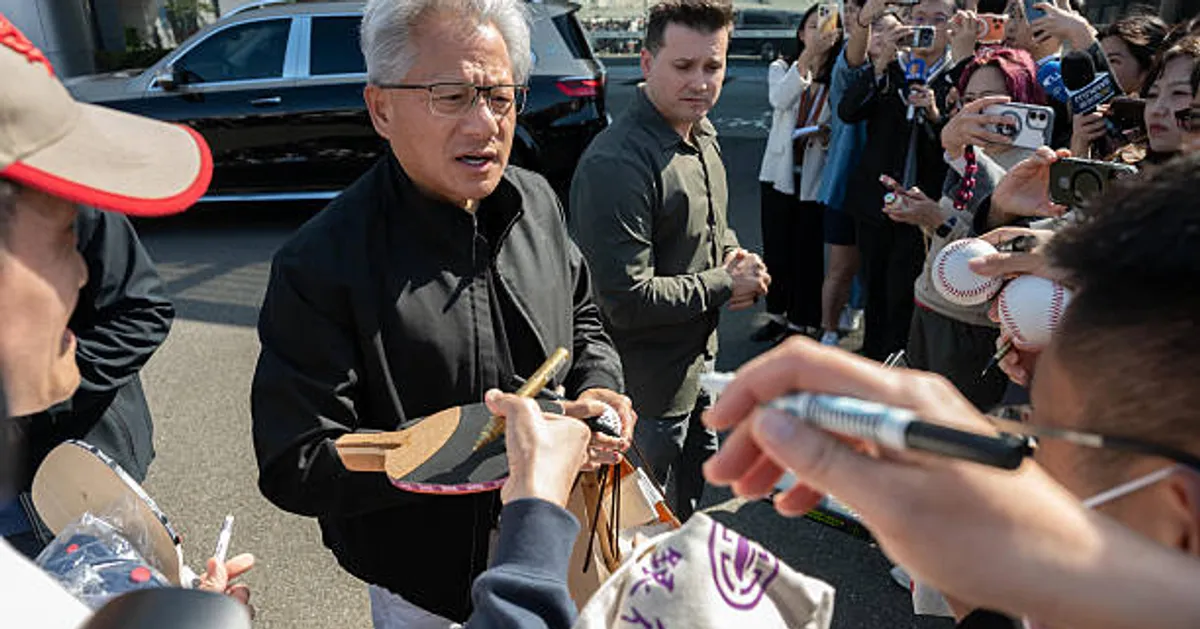
Taipei, Jan. 29 (GeokHub) Nvidia Chief Executive Jensen Huang said on Thursday that regulatory approval allowing the U.S. chipmaker to sell its powerful H200 artificial intelligence chip in China is still being finalised, as Beijing weighs its AI ambitions against efforts to strengthen its domestic semiconductor industry.
Speaking to reporters at Taipei’s Songshan Airport after returning from a visit to China, Huang said discussions were ongoing and that he remained hopeful of a positive outcome.
“The actual licence for H200 is being finalised,” Huang said. “I’m hoping the Chinese government will allow Nvidia to sell the H200. They have to decide, and I’m looking forward to a favourable decision.”
H200 at the Center of U.S.–China Tech Tensions
The H200 is Nvidia’s second-most powerful AI chip and has emerged as a key flashpoint in U.S.–China technology relations. While U.S. authorities have approved exports of the chip under certain restrictions, Beijing has so far been slow to grant final import clearance.
China has not publicly explained the delay, but officials have sought to balance strong demand from domestic AI companies with long-term goals to nurture local chipmakers.
Huang said Chinese customers are eager to access the H200, calling the chip beneficial both for U.S. technological leadership and China’s AI market.
Conditional Approvals Cloud Near-Term Orders
Earlier this week, Reuters reported that Chinese authorities had granted conditional approval to companies including ByteDance, Alibaba and Tencent to purchase more than 400,000 H200 chips combined. However, sources said the conditions attached were restrictive, and the approvals had yet to translate into confirmed orders.
Huang said Nvidia had not received such information and that his understanding was that the Chinese government was still deliberating.
Supply Chain Constraints Remain a Challenge
Asked how Nvidia would manage supply if approval is granted, Huang said the company would work closely with its manufacturing partners, including Taiwan Semiconductor Manufacturing Co (TSMC), to meet demand.
“If H200 is approved, we will work with TSMC to schedule and plan the supply and deliver as fast as we can,” he said, acknowledging that advanced chip packaging capacity remains constrained.
Nvidia relies heavily on Taiwan’s semiconductor ecosystem, partnering with TSMC as well as major contract manufacturers such as Foxconn and Wistron. TSMC is also investing $165 billion to expand manufacturing capacity in Arizona.
OpenAI Investment Interest Confirmed
Huang also signalled interest in participating in OpenAI’s next funding round, saying he would “love to invest” in the ChatGPT maker, though he declined to comment on potential deal size.
Recent reports have said Nvidia, alongside Microsoft and Amazon, is in talks to invest up to $60 billion in OpenAI, reflecting escalating capital needs across the AI industry.