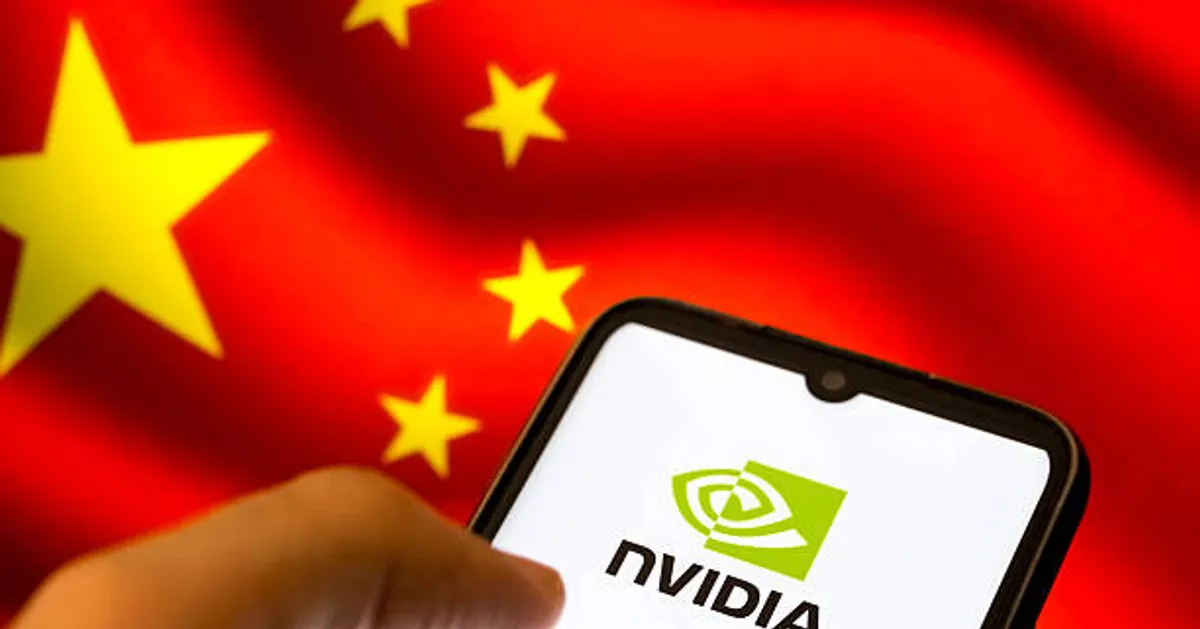
San Francisco, Jan. 28 (GeokHub) A senior U.S. lawmaker has alleged that Nvidia provided technical assistance that helped a Chinese artificial intelligence firm develop advanced AI models later used by China’s military, raising renewed concerns over the effectiveness of U.S. technology export controls.
In a letter to U.S. Commerce Secretary Howard Lutnick, Representative John Moolenaar, chair of the House Select Committee on China, said documents obtained by the committee showed Nvidia engineers assisted Chinese AI startup DeepSeek in significantly improving the efficiency of its AI model training.
DeepSeek drew global attention last year after unveiling AI models that rivaled leading U.S. systems while requiring far less computing power, intensifying fears in Washington that China could narrow the AI gap despite U.S. restrictions on advanced chips.
Technical Assistance and Efficiency Gains
According to the letter, Nvidia personnel supported DeepSeek through an “optimized co-design of algorithms, frameworks, and hardware,” enabling major reductions in training costs. Internal Nvidia documents cited by the committee indicate that DeepSeek’s V3 model required roughly 2.8 million GPU hours for full training — substantially lower than what U.S. developers typically need for frontier-scale AI models.
GPU hours measure the amount of time AI chips must run to train a model, while frontier-scale models refer to the most advanced systems produced by U.S. firms such as OpenAI, Anthropic, and Google.
The documents reviewed by lawmakers cover Nvidia’s activities in 2024. At that time, Moolenaar noted, there was no public evidence that DeepSeek’s technology had military applications.
“Nvidia treated DeepSeek as a legitimate commercial partner deserving of standard technical support,” Moolenaar wrote.
Export Controls and National Security Concerns
DeepSeek relied on Nvidia’s H800 chips, which were specifically designed for the Chinese market and sold there before being placed under U.S. export restrictions in 2023. U.S. officials have since said they believe DeepSeek is assisting China’s military, according to earlier reporting.
In response, Nvidia said China’s military does not depend on American technology.
“China has more than enough domestic chips for all of its military applications,” the company said, adding that it would make little sense for either country’s military to rely on the other’s technology.
Political Fallout and Policy Debate
The issue has gained urgency following a recent decision by President Donald Trump’s administration to approve limited sales of Nvidia’s more powerful H200 chips to China, provided they are not supplied to entities supporting the Chinese military.
That move drew criticism from lawmakers across party lines who warned that advanced AI chips could enhance Beijing’s military capabilities and weaken the U.S. technological edge.
“If even the world’s most valuable company cannot rule out military use of its products, rigorous licensing and enforcement are essential,” Moolenaar wrote, arguing that sales to non-military users in China could still violate military end-use restrictions.
China rejected the accusations. Liu Pengyu, a spokesperson for the Chinese Embassy in Washington, said Beijing opposes the politicization of trade and technology and urged the U.S. to maintain stable global supply chains.
The U.S. Commerce Department and DeepSeek did not immediately respond to requests for comment.