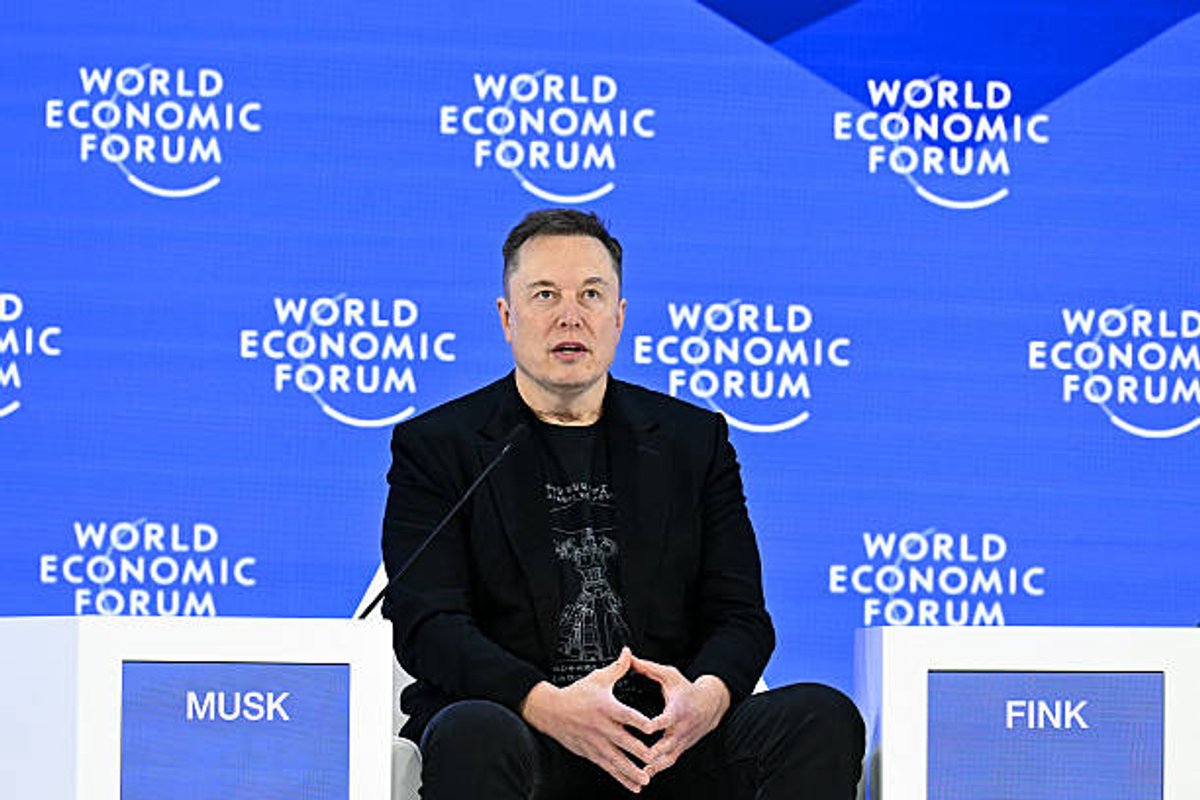
DAVOS, Switzerland | Jan 22 (GeokHub) Tesla is likely to secure regulatory approval in Europe and China for its driver-supervised Full Self-Driving (FSD) system as early as next month, Chief Executive Elon Musk said on Thursday, as the electric vehicle maker looks to accelerate software revenue amid slowing car sales.
Speaking at the World Economic Forum in Davos, Musk said Tesla hopes to receive approval for supervised FSD in Europe in February, with China potentially following on a similar timeline.
“We hope to get Supervised Full Self-Driving approval in Europe, hopefully next month, and then maybe a similar timing for China,” Musk said.
Regulatory Hurdles Remain
Tesla has long faced tougher regulatory barriers in Europe, where stricter safety rules and fragmented national approval systems have slowed the rollout of advanced driver-assistance technologies compared with the United States.
The Dutch vehicle authority RDW said in November it expected to decide on Tesla’s FSD application in February. Tesla has previously indicated that approval in the Netherlands could allow other EU countries to recognize the exemption ahead of broader European authorization.
In China, Tesla has faced even tighter controls. Smart driving features similar to FSD remain limited to a small number of vehicles, after the company paused software updates last March pending additional regulatory clearance. A long-awaited update released in February last year disappointed some Chinese customers who had paid more than $9,000 for the system but found it restricted in real-world use.
Regulators globally continue to classify FSD as an advanced driver-assistance system, requiring constant driver attention, and have subjected it to close scrutiny over safety and oversight concerns.
Robotaxi Progress Lifts Shares
Separately, Musk said Tesla has begun operating robotaxi rides in Austin, Texas, without safety monitors, marking a step forward in the company’s autonomous ambitions.
The service initially launched in June with a Tesla employee seated in the front passenger seat. Social media posts about the driverless rides helped push Tesla shares 4.2% higher on Thursday.
Tesla already operates a ride-hailing service in California and holds permits to test and deploy robotaxis in Texas, Arizona and Nevada. Still, the pace of rollout remains slower than Musk’s earlier projections to operate robotaxis in several major U.S. cities.
Sales Pressure and Competition
Tesla continues to face headwinds in its core vehicle business. Registrations in California fell 11.4% last year, with the company’s market share of new car sales slipping below 10%, according to the California New Car Dealers Association.
Globally, Tesla reported a second consecutive annual drop in vehicle deliveries in 2025, losing its crown as the world’s largest electric vehicle maker to China’s BYD.
Humanoid Robot Ambitions
Musk also reiterated Tesla’s ambitions beyond vehicles, saying much of the AI developed for autonomous driving would underpin the company’s Optimus humanoid robot program.
He said Tesla now expects to sell Optimus robots to the public by the end of 2027, later than previously forecast, adding that robots could eventually outnumber humans.
Industry analysts caution that scaling humanoid robots remains technically complex, citing challenges around data, regulation and manufacturing economics.
“For Optimus, what the market needs is credible evidence of scalable manufacturing, a regulatory path, and unit economics,” said Ken Mahoney, CEO of Mahoney Asset Management and a Tesla shareholder.