BEIJING / HONG KONG — One year into Donald Trump’s return to the White House, China has emerged as an increasingly central player in global trade by deepening ties with partners beyond the United States, capitalising on uncertainty triggered by Washington’s shifting economic and diplomatic posture.
When Trump re-entered office with a renewed “America First” agenda, many analysts predicted fresh pressure on China’s already slowing economy. Instead, Beijing has leveraged strained U.S. relations with allies to reposition itself as a stable and reliable alternative, helping deliver a record trade surplus in 2025 and strengthening the global role of its currency.
China’s trade surplus climbed to $1.2 trillion last year, while monthly foreign exchange inflows surged to historic highs. At the same time, the use of the yuan in global trade and finance has expanded sharply, reflecting a broader shift in international economic alignment.
Beijing Courts New Partners
As Washington tightened tariffs and escalated trade rhetoric, China moved quickly to rebuild and expand relationships with key economies including Canada, India and European partners, analysts say.
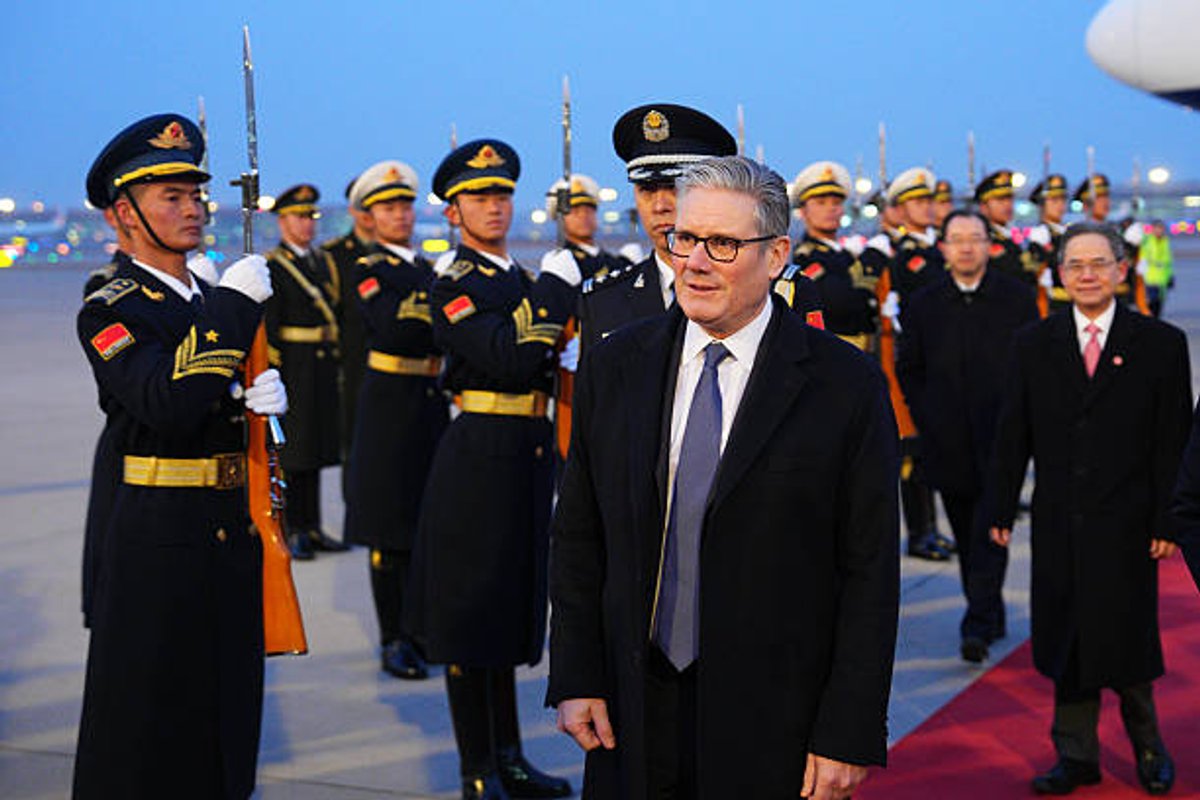
This week, Britain’s prime minister arrived in China for a four-day visit aimed at resetting commercial ties — the first such visit in years. The trip followed a high-level Canadian delegation earlier this month that resulted in new agreements designed to reduce trade barriers and deepen economic cooperation.
Economists note that Beijing is presenting itself as a predictable counterweight at a time when U.S. trade policy has become harder for businesses and governments to plan around.
“China has positioned itself as a steady and dependable trade partner,” said one emerging markets investment strategist. “That message is resonating with countries looking for certainty.”
Trade Shifts Reshape Global Flows
While tariffs imposed by Washington sharply reduced China’s exports to the U.S., shipments to other regions surged. Exports rose strongly to Africa, Southeast Asia, Latin America and the European Union, offsetting losses in the American market and underscoring Beijing’s diversification strategy.
At the same time, China rolled out targeted measures to support private enterprises, capital markets and foreign investment, including expanded access in sectors such as healthcare, telecommunications and education.
Despite weak domestic consumption and ongoing stress in the property sector, China met its official 5% growth target in 2025, easing concerns about a sharper slowdown.
Yuan Gains Momentum as Dollar Appeal Wavers
China’s financial markets have also benefited from shifting global sentiment. Equity benchmarks outperformed major U.S. indices over the past year, while trading activity reached record levels.
Bankers say Beijing is accelerating efforts to promote the yuan in cross-border trade as confidence in the U.S. dollar wavers amid volatile American trade policy. More than half of China’s international transactions are now settled in its own currency, a dramatic increase from a decade ago.
Global banks are expanding yuan liquidity in offshore hubs and upgrading payment systems to accommodate faster settlements across Asia, the Middle East and Europe.
“This cycle of yuan internationalisation feels different,” said a senior banker involved in Asian trade finance. “Current U.S. policies are indirectly accelerating its adoption.”
Strategic Caution Remains
Still, analysts warn that China’s diplomatic charm offensive has limits. While some countries are warming to Beijing’s economic overtures, lingering concerns remain over trade practices, geopolitical disputes and the use of economic pressure in past conflicts.
For now, however, China’s message of stability appears to be gaining traction — particularly as global businesses and governments seek alternatives in an increasingly fragmented economic landscape.