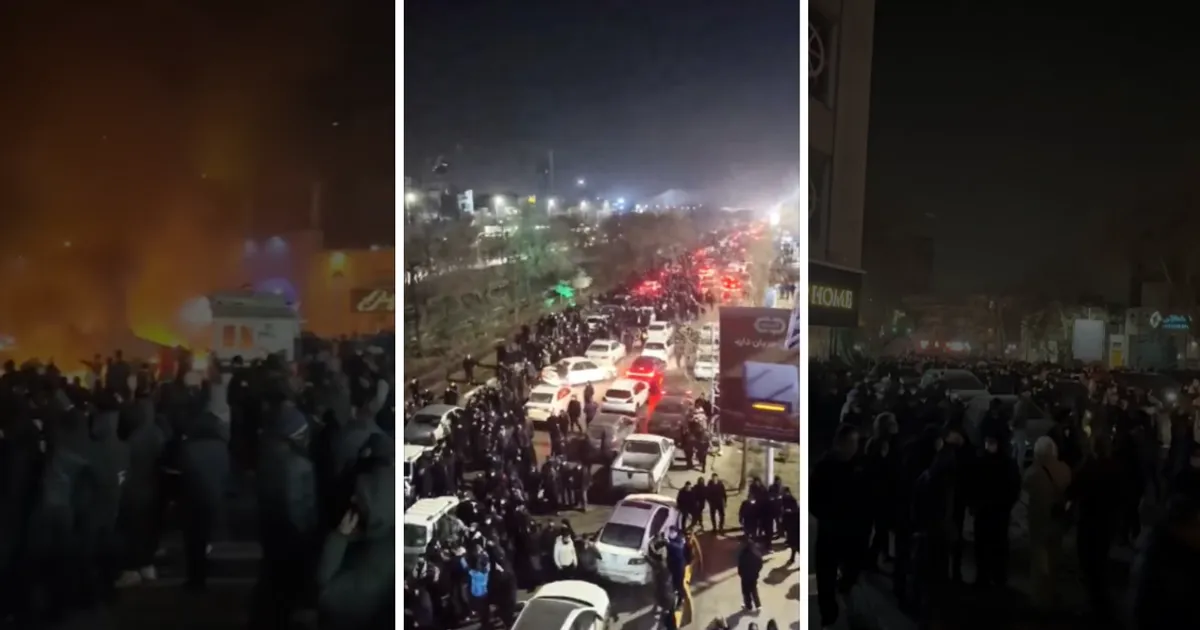
GEOKHUB | Dubai — Jan 9 Iranian authorities sharply restricted internet access nationwide on Friday as anti-government protests escalated, with videos and eyewitness accounts showing buildings, vehicles, and public infrastructure set ablaze in several cities.
The blackout effectively cut Iran off from much of the outside world, limiting phone calls and online communication as unrest spread beyond its initial economic roots. At least dozens of deaths have been reported by rights groups, though official figures remain undisclosed.
In a nationally televised address, Supreme Leader Ayatollah Ali Khamenei took a hard line, vowing that the Islamic Republic would not retreat in the face of what he described as foreign-backed unrest. He accused demonstrators of acting on behalf of opposition groups abroad and the United States.
“The Islamic Republic was built with sacrifice and blood,” Khamenei said. “It will not surrender to vandals.”
The protests began late last month with shopkeepers and bazaar merchants demonstrating against soaring inflation and the collapse of the rial, which lost roughly half its value against the U.S. dollar last year. Inflation exceeded 40% in December, deepening public frustration.
What started as economic protests has since evolved into direct political dissent, with demonstrators chanting slogans aimed at Iran’s leadership. Verified videos from Tehran showed hundreds marching through the streets, with some shouting “Death to Khamenei.”
Fires, Gunfire, and Travel Disruptions
State television aired footage overnight of burning buses, cars, motorcycles, banks, and metro stations, describing scenes as coordinated violence rather than peaceful protest. A state TV reporter in the northern port city of Rasht described the area as resembling “a war zone.”
In southeastern Zahedan, the Kurdish and Baluch rights group Hengaw reported that security forces fired on a protest march following Friday prayers, wounding several people.
The internet shutdown sharply reduced the flow of information, while aviation data showed at least 17 flights between Dubai and Iran were cancelled, highlighting the broader disruption.
Iranian authorities have attempted a dual strategy — acknowledging economic grievances while cracking down aggressively on what they label “rioters.” Judiciary chief Gholamhossein Mohseni Ejei warned that punishment would be “decisive” and carried out without leniency.
Fragile Moment for Tehran
Analysts say the unrest, while smaller in scale than past nationwide uprisings, poses a serious challenge due to Iran’s fragile economy and the lingering effects of last year’s conflict with Israel and the United States.
Exiled opposition figures called for sustained demonstrations. Reza Pahlavi, son of Iran’s last monarch, urged Iranians to remain in the streets, saying the world was watching. However, support for exile groups and monarchist movements inside Iran remains deeply divided.
U.S. President Donald Trump, who warned Tehran last week that Washington could support protesters, said on Friday he would not formally back Pahlavi, adding that such support might be inappropriate.
Germany condemned the violence against demonstrators, calling on Iranian authorities to respect the right to peaceful assembly and allow free reporting by the media.